There’s something about putting something together with your own hands.
Not just clicking “add to cart” — actually choosing each thing. Holding it. Wondering if this is the right kind of tea or whether they’d prefer that chocolate. Arranging it in a basket, wrapping it, writing a note. It takes longer. That’s the point.
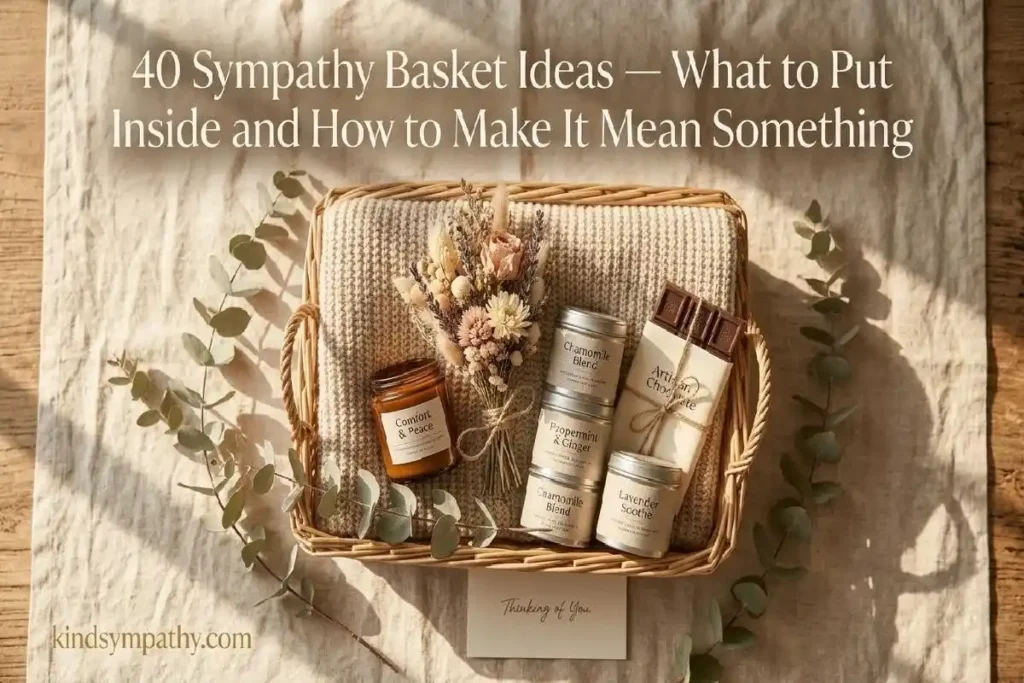
A sympathy basket is different from a single gift. It’s a collection of small comforts that together say something a single item can’t — it says: I thought about you more than once. I thought about what you’d need and what you’d like and what might help on the different kinds of hard days. Here’s all of it, in one place, ready for you.
Whether you’re building one yourself or ordering a ready-made condolence basket and adding something personal to it — these 40 sympathy basket ideas give you everything you need to create something genuinely thoughtful.
For the words to go inside the card, our guide to what to write in a sympathy card has everything. And our broader sympathy gift ideas guide covers individual gifts if a basket isn’t right for this person.
What are sympathy basket ideas? Sympathy basket ideas are curated collections of comfort items assembled together in a basket, hamper, or box to send to someone who is grieving. The best sympathy basket ideas combine practical items (food, warmth) with comfort items (self-care, rest) and a personal note — creating a multi-layered gift that addresses several needs at once.
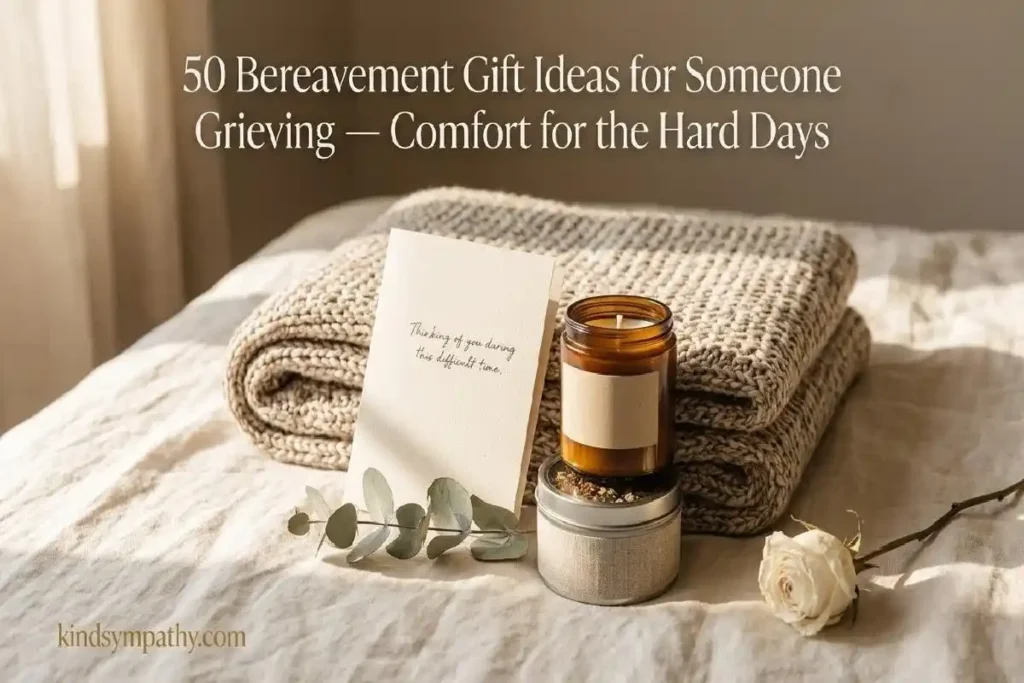
💬 Best Sympathy Basket Idea Example: A “comfort evening” basket: a weighted eye mask, a lavender candle, chamomile and sleep teas, a small bar of quality chocolate, a soft pair of socks, and a handwritten card that says: “For the evenings that feel too quiet. Nothing to do with this but receive it.” This works because each item has a specific purpose (comfort, warmth, sleep, small pleasure) and the note removes any expectation of response or gratitude. The whole basket is designed for one specific time of day — the quiet evening — which gives it coherence.
“For the comfort-focused approach, our bereavement gift ideas covers self-care and comfort items. For UK-style hampers, our condolence hamper ideas has similar options.”
The Art of the Sympathy Basket — Why Curation Is the Gift
Let’s be honest about what makes one basket better than another. It’s not the price. It’s not the basket itself. It’s the evidence of thought.
When someone opens a sympathy basket and finds their specific favourite biscuits, or a tea they once mentioned, or a candle in a scent they love — they feel something that a generic hamper can’t produce. They feel known. Seen. Thought about.
That’s the goal. Not the most expensive basket. The most thoughtful one.
Here’s how to get there:
- Choose around a theme. The best baskets are coherent — a “sleep support” basket, a “nourishment” basket, a “cosy evening” basket. A theme helps you choose what to include and what to leave out.
- Add one personal item. Something chosen specifically for this person — their favourite snack, a book they’d love, a scent you know they like. This one item elevates everything around it.
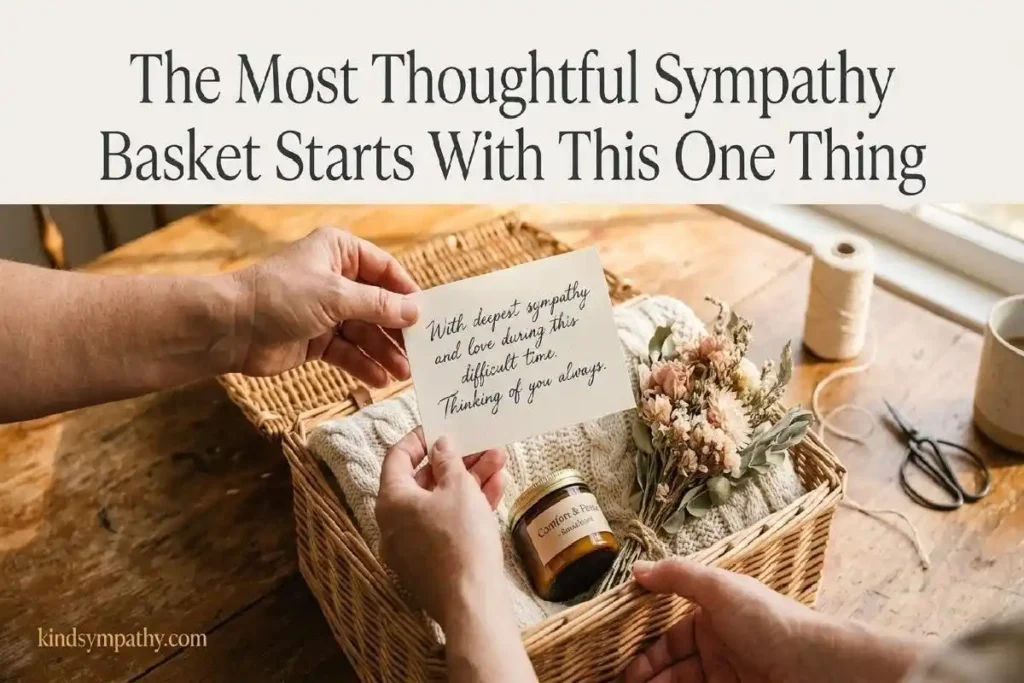
- Write the card last. Once the basket is assembled, you’ll know exactly what to say about it. “This is for the quiet evenings” or “for the week when everything feels hard” — the basket tells you what the card should say.
For the words, our sympathy messages collection has every format covered.
Sympathy Basket Ideas by Theme — Building Around a Purpose
The easiest way to build a meaningful sympathy hamper is to choose a theme and build around it. These 40 ideas are organised by theme — from complete basket concepts to individual items to add to an existing basket.
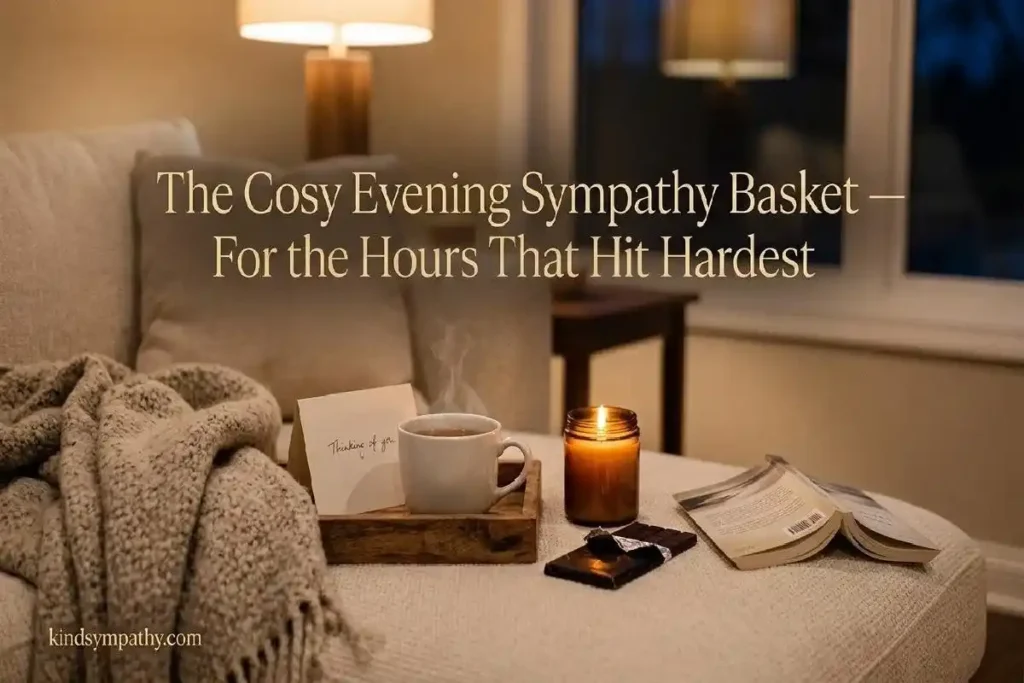
Theme 1 — The Cosy Evening Basket
For the evenings that hit hardest. Everything in this basket is for sitting on the sofa and being held by warmth.
- Soft throw blanket. The anchor item — something warm, something to wrap around yourself.
- Two or three herbal teas. Chamomile, lavender, peppermint — comfort in a cup.
- Quality hot chocolate sachets. For the nights when tea isn’t enough.
- Small candle. A quality scented candle — warm, not floral. Vanilla, woodsmoke, amber.
- A chocolate bar or two. Their favourites if you know them. Quality over quantity.
- A short, beautiful book. A collection of poetry, a short essay collection, or a comfort read.
- A card: “For the evenings that feel too quiet. Nothing to do except receive this.”
Theme 2 — The Sleep Support Basket
Sleep is the first thing grief takes. This basket is specifically designed to help with that.
- A weighted eye mask. Blocks light, adds gentle pressure — genuinely useful for anxious nights.
- Lavender pillow spray. A quality one — not synthetic, properly calming.
- Chamomile and valerian tea. Sleep-supporting herbs, presented nicely.
- A pair of soft socks. Warm feet genuinely help with sleep quality.
- A sleep meditation app card. A gift card for Calm or a printed note with a free code.
- A note: “Grief is hard on sleep. This is for getting some of it back.”
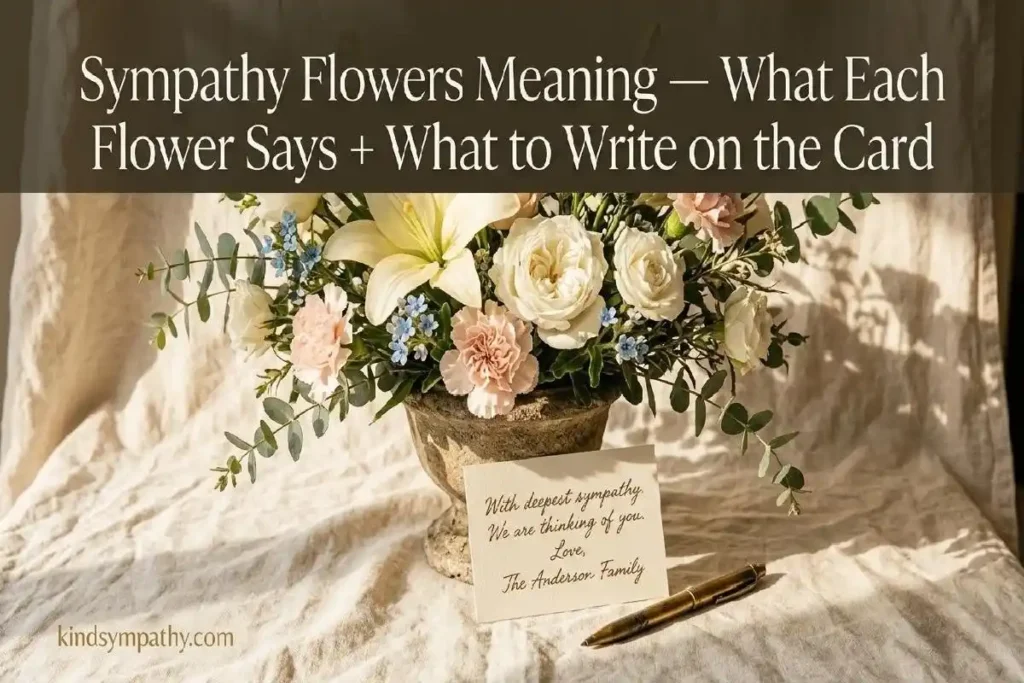
“For adding flowers to a basket, our sympathy flowers meaning helps choose the right blooms. Our what to write on sympathy flowers completes the arrangement.”
Theme 3 — The Nourishment Basket
For the person who isn’t cooking properly. This basket is pure practical love.
- Quality soup, tins or packets. Real soup — good stock, proper ingredients. Not the cheap kind.
- Good crackers or bread. To eat with the soup. Simple, no preparation required.
- A jar of quality honey or jam. A small luxury that requires nothing.
- Good olive oil and pasta. A simple meal, waiting in the basket.
- A nice piece of chocolate. The unnecessary item that makes the basket feel like care rather than a food parcel.
- A meal delivery gift card, tucked in. For the nights when even opening cans feels like too much.
- A card: “You don’t have to figure out dinner. Here’s a start.”
Theme 4 — The Self-Care Basket
For the person who’s been looking after everyone else and forgetting themselves.
- A quality bath product. Epsom salts, a bath oil, or a bath bomb — something that invites a long, slow bath.
- A face mask or moisturiser. Grief dries the face. Something nourishing.
- A small scented candle. For the bathroom. Creating a ritual.
- A soft pair of pyjamas or a robe. The basket anchor — something to actually wear.
- A note: “You’re doing so much for everyone. This is a few hours of just you. Take them.”
Theme 5 — The Reading and Resting Basket
For the person who retreats into books, or who needs distraction.
- A grief book. “It’s Okay That You’re Not Okay” by Megan Devine — honest about grief, no toxic positivity.
- A comfort novel. A long, absorbing read — something they can get lost in. Ask someone who knows them what they’d love.
- A quality notebook and pen. For writing through the impossible feelings.
- Bookmark. A personalised one, or a quality one they’ll use.
- Quality tea or coffee. For reading with.
- A note: “For the afternoons when you need somewhere else to be for a while.”
Theme 6 — The Memory and Tribute Basket
For the person who wants to hold their person close. This basket is about remembrance as much as comfort.
- A personalised memorial candle. With the deceased’s name — something to light.
- A small frame for a photo. Ready to be filled.
- A quality journal. Specifically for memories — things they want to say, things they want to keep.
- A seed packet. With a note: “Plant these somewhere that belongs to them.”
- A handwritten note about the person who died. A specific memory, written from you. This is the most personal item in any basket.
- A card: “This is for keeping them close. For all the things you still want to say.”
Theme 7 — The Practical Support Basket
Not romantic, but genuinely useful. For the person managing everything alone.
- A grocery delivery gift card.
- A meal delivery gift card.
- A petrol/gas gift card.
- A notepad and pen. For the practical list-making of grief — notifications, arrangements, to-dos.
- A card: “I’ve taken some things off your list. Please let people keep doing that for a while.”
DIY Sympathy Basket — How to Build One That Feels Right
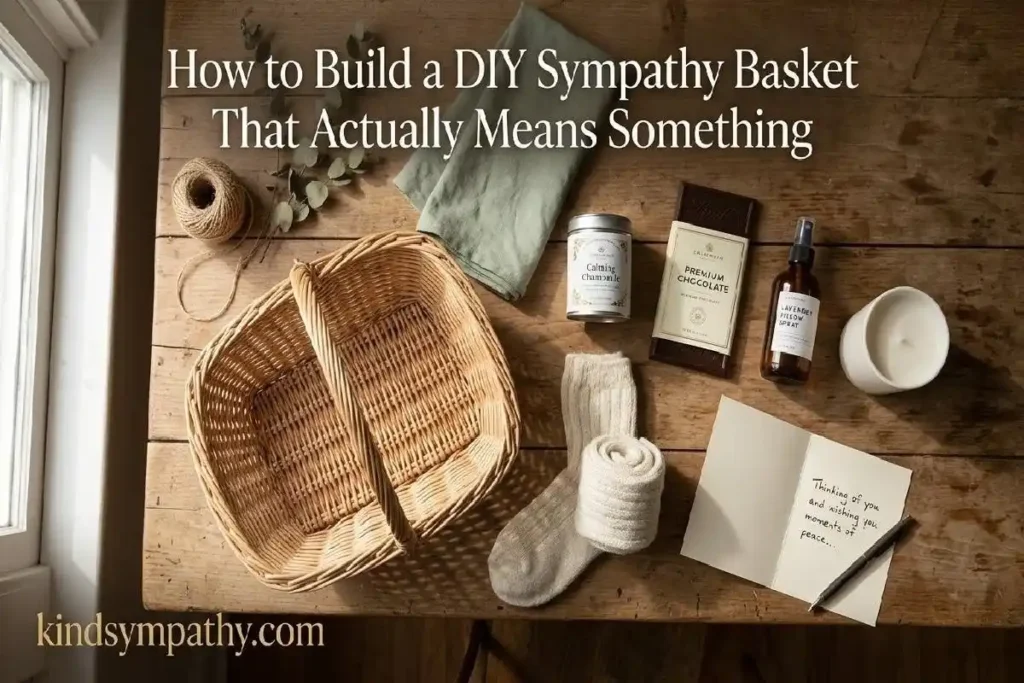
Building your own sympathy care package takes more time than ordering one. It’s also almost always more meaningful — because the time is visible. Here’s how to do it well.
Choose your basket or box first. A good container matters. A wicker basket, a quality box, a linen-lined tray — something that looks deliberate. The container is part of the gift.
Build around a theme. Pick one from the list above. A themed basket feels intentional in a way that a random collection doesn’t.
Five to seven items is enough. More than seven and the basket starts to feel overwhelming. Less than five and it feels sparse. The sweet spot is five to seven well-chosen items.
Add one thing that’s specifically for them. Their favourite biscuits. A book they mentioned once. A scent you know they love. This one personal item is what elevates the basket from “thoughtful” to “she was thinking about me specifically.”
The card is not an afterthought. Write it last, once the basket is assembled. Look at what you’ve built and write to it: “This is for the evenings that feel too long” or “This is for whenever you need it — no timeline.” Our guide to what to write in a sympathy card has everything you need for the written part.
Ready-Made Sympathy Hamper Ideas — When You Need Something Sent Today
Not everyone has time to build a basket. These condolence basket options are available ready-made — but the key is adding something personal.
What to add to any ready-made basket:
- A handwritten card with a specific, personal note (not the generic card from the company)
- One item chosen specifically for them — tucked in with the ready-made items
- A note from you, not the company
A ready-made bereavement basket that arrives with a generic card feels like a gesture. The same basket with your handwriting on a card feels like care. The difference is ten minutes and a pen.
Sources to look for:
- Local artisan food companies (often superior to supermarket hampers)
- Specialist grief care package companies (many now exist)
- Flower delivery companies with hamper add-ons
- Supermarket premium food services (Fortnum & Mason, Harrods, Dean & DeLuca, Zingerman’s)
For more options beyond the basket format, our bereavement gift ideas guide and memorial gift ideas guide cover the full spectrum.
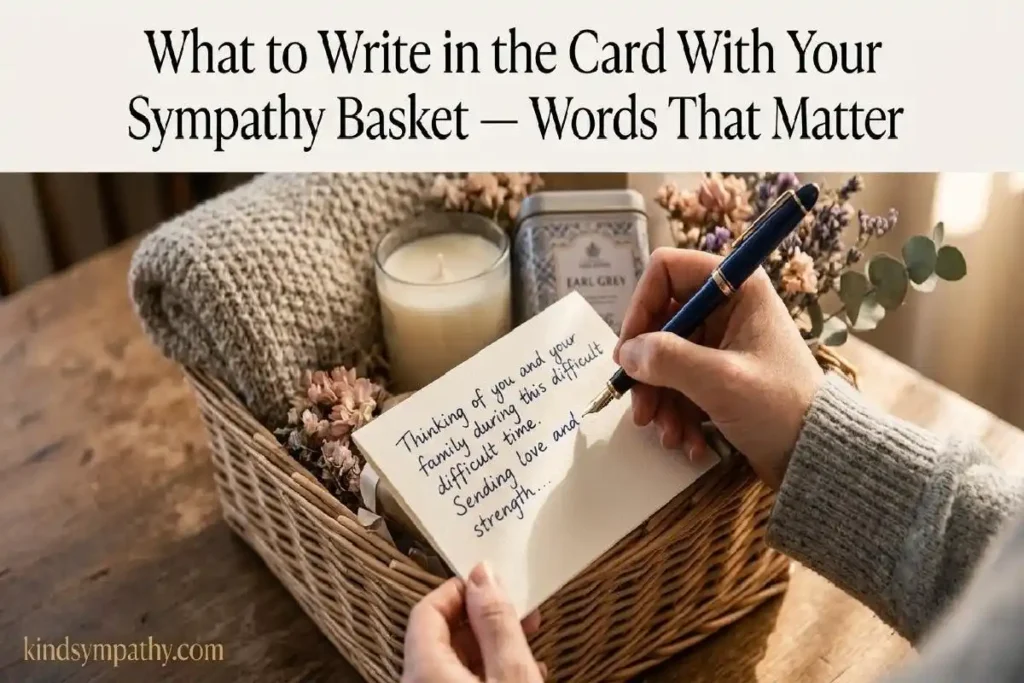
What to Write in the Card That Goes With Your Sympathy Basket 📋
The basket is the gesture. The card is the message. These are ready to write. Just copy this 👇
With a cosy evening basket: “For the evenings that hit hardest. Nothing to do except receive this. Thinking of you.”
With a sleep basket: “Sleep is often the first thing grief takes. This is for getting some of it back. No rush — just rest when you can.”
With a nourishment basket: “You don’t have to figure out dinner tonight. Here’s a start. I’m thinking of you.”
With a self-care basket: “You’re doing so much for everyone. This is a few hours of just looking after yourself. Please use them.”
With a reading basket: “For the afternoons when you need somewhere else to be for a while. No expectations — just options.”
With a memory basket: “This is for keeping [name] close. For all the things you still want to say. I’m here whenever.”
With a practical basket: “I’ve tried to take a few things off the list. Please let people keep doing that while you find your footing.”
What NOT to Put in a Sympathy Basket
Some common basket items miss the mark. Here’s what to skip.
❌ Alcohol, unless you know they drink and would welcome it. Why it misses: Grief and alcohol have a complicated relationship. Unless you know this person drinks and would genuinely appreciate it, leave it out. ✅ Use instead: Quality non-alcoholic drinks — sparkling water, elderflower cordial, good juices.
❌ Things that will go off quickly. Why it misses: A grieving person may not open the basket immediately. Fresh bread, ripe fruit, or things with a two-day shelf life can create a problem. ✅ Use instead: Quality shelf-stable items — good tins, dried goods, quality packaged foods.
❌ Things that require cooking or preparation. Why it misses: Grief brain makes preparation difficult. A basket item that requires reading a recipe is a burden, not a comfort. ✅ Use instead: Ready-to-eat or very simple items. The simpler the better.
❌ Religious items for a non-religious family. Why it misses: Well-intentioned but potentially wrong register. ✅ Use instead: Something universal — warmth, food, comfort.
❌ A generic company card with no personal note from you. Why it misses: The whole point of a sympathy basket is that you thought about this specific person. A company card undoes that. ✅ Do instead: Always add your own handwritten note. Even one genuine sentence. That’s the gift inside the gift.
💡 5 Tips for Building a Sympathy Basket That Actually Lands
Tip 1: Build around one specific time of day or need. The best baskets are coherent — they’re “for the evenings” or “for getting through the week.” A basket with a clear purpose feels intentional in a way that a random collection doesn’t. Choose your theme first, then choose your items.
Tip 2: Know what they like — or ask someone who does. The item that makes a basket feel personal rather than generic is the one that shows you know them. Their specific favourite tea, their preferred chocolate, a book by an author they love. That one item changes the whole basket. Research on the psychology of grief and human connection confirms that feeling specifically seen — not just generally supported — is what matters most to bereaved people.
Tip 3: Five to seven items is the sweet spot. Less than five feels sparse. More than seven can feel overwhelming to someone with grief brain who can’t easily process a lot of things at once. Choose well rather than choosing much.
Tip 4: Send it at the right time — including later. Most sympathy baskets arrive in the first week. A basket that arrives three weeks later, when the initial support has dried up, can mean even more. Harvard Health’s research on the physical and emotional toll of grief over time confirms that the need for care and support extends well beyond the acute phase. Consider a basket in the first week AND something smaller again at the month mark.
Tip 5: The card is not optional. A beautiful basket with no personal note says “I wanted to do something.” A personal note — even one handwritten sentence — says “I was thinking about you.” They’re completely different gestures. Write the card last, after the basket is assembled. Look at what you’ve made and let it tell you what to say.
❓ FAQ — Sympathy Basket Ideas
What is the best sympathy basket idea to send after a loss?
The best sympathy basket ideas are themed around a specific need or time of day — a “cosy evening” basket, a “sleep support” basket, or a “nourishment” basket. These feel coherent and intentional rather than random. Whatever the theme, add one item chosen specifically for this person and include a handwritten card. That combination — theme, personalisation, personal note — is what makes a sympathy basket genuinely meaningful.
What are some quick sympathy basket ideas I can put together or order today?
For an immediate, same-day option: a warm throw, a quality tea collection, a bar of good chocolate, a candle, and a handwritten card. That’s five items, available from almost any quality supermarket or homeware store, that form a coherent and comforting condolence basket. Alternatively, several specialist companies offer next-day grief care packages — add your own card to any ready-made option.
What do you write in a card that goes with a sympathy basket?
Write to the basket’s purpose. If it’s a cosy evening basket: “For the evenings that feel too quiet. Nothing to do except receive this.” If it’s a sleep basket: “Grief is hard on sleep. This is for getting some of it back.” The basket tells you what the card should say. Our full guide to what to write in a sympathy card has complete wording for every situation.
Should I build a sympathy basket myself or buy a ready-made one?
Both work — the key is personalisation. A DIY sympathy hamper shows more visible effort but takes more time. A ready-made one is faster but should always be personalised with your own handwritten note and one item you’ve chosen specifically for the recipient. The personal note is what transforms either option from a gesture to a gift.
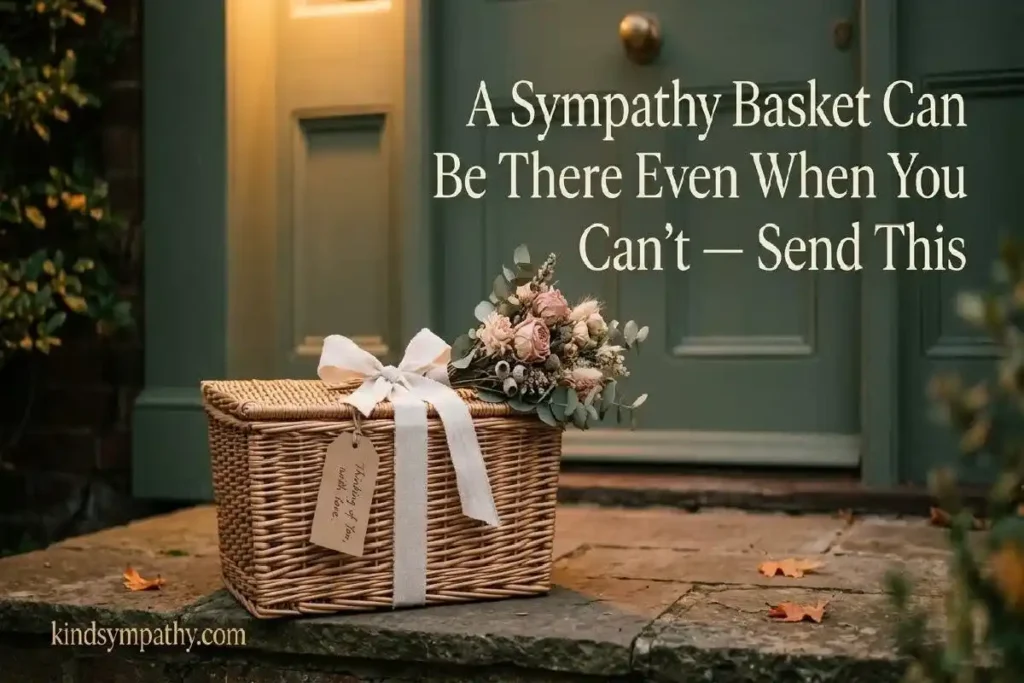
Is it okay to send a sympathy basket even if you can’t attend the funeral or are far away?
A sympathy basket sent from a distance is one of the most meaningful things you can do. Research on the psychology of grief and human connection shows that genuine, practical care — even from far away — meaningfully reduces the isolation of bereavement. And Harvard Health confirms that the physical and emotional effects of grief are better managed when people feel genuinely supported. A basket that arrives saying “I couldn’t be there, but I was thinking about you” does something real, from wherever you are.