
Last Updated on August 24, 2026 by veeramani R

You’d been grieving for months already.
Maybe longer. From the moment the diagnosis came, or the moment you realized the trajectory wasn’t going to change, something in you began the long, quiet work of preparing. You showed up. You sat with them. You watched them become less and less of themselves, and you kept coming back, because love doesn’t stop just because the prognosis is certain.
And then it was over. And alongside the grief — the real, enormous, person-shaped grief — there was something else. A quieting. A strange, exhausted, guilty sense of relief.
Not because you wanted them gone. Because you didn’t want them to suffer anymore. Because you couldn’t watch them diminished any longer. Because you were running on empty in a way that only people who’ve kept a long vigil can understand.
Sympathy messages after long illness need to hold all of that. Not just the grief — the relief too. These condolences for expected death are built for exactly that complexity.
What are sympathy messages after long illness? Sympathy messages after long illness are condolence words offered to someone whose loved one died after a prolonged illness — a death that was anticipated, but no less devastating for it. The best ones acknowledge the complicated emotional reality of this grief: the relief that suffering is over, the sadness that the person is gone, and the particular exhaustion of a long goodbye. They hold all of it, without judgment.
💬 Best Sympathy Message After Long Illness Example: “You’ve been carrying this for so long — the watching, the waiting, the showing up when it was hard, the holding on when letting go felt like the only kind thing left. Whatever you’re feeling right now — grief, relief, exhaustion, all of it at once — is exactly what you’re supposed to feel. I’m here for all of it.” This works because it honors the entire journey, not just the ending. It names the complexity of grief after long illness without flinching from the word “relief.” That validation — explicit, non-judgmental — is what people in this grief need most.
“When death is sudden rather than expected, our sympathy messages for sudden death speaks to that shock. For cancer specifically, our sympathy messages for death from cancer honors the fighter’s journey.”
Short Sympathy Messages After Long Illness (Gentle, True, Room for Everything)
The best short sympathy messages after long illness don’t rush to condolence without acknowledging the road that got here. They recognize that this person has been grieving for a long time already — and they don’t ask them to start the process fresh. These work for texts, card notes, and the quiet check-ins that say: I see all of it, not just the ending.
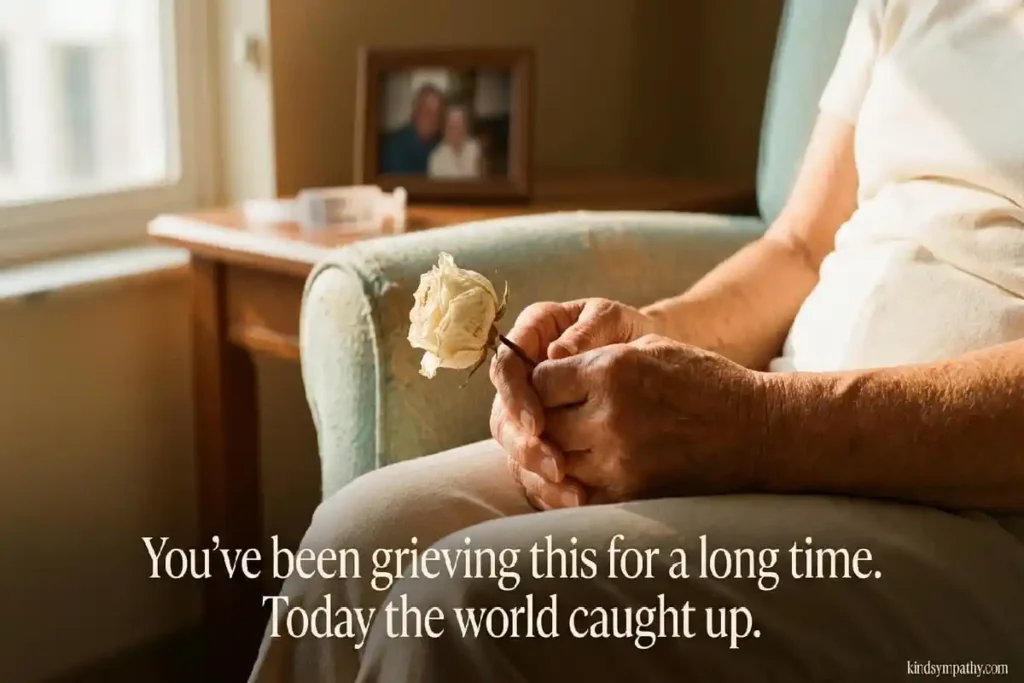
- “You’ve been grieving this for a long time. Today is just when the world caught up.”
- “Whatever you’re feeling right now — it’s allowed. All of it.”
- “Relief and grief can exist in the same breath. Both are real. I’m here for both.”
- “You held on through so much. Please be as gentle with yourself now as you were with them.”
- “I’m so sorry for your loss — and so glad their suffering is over. Both of those are true.”
- “You showed up for them through everything. Now let someone show up for you.”
- “The long goodbye is its own kind of grief. You’ve been in it for a while.”
- “I’m so deeply sorry. I hope there’s some peace alongside the sadness today.”
- “Please don’t feel guilty for any part of what you’re feeling. All of it is valid.”
- “You loved them through so much. That love doesn’t end here.”
- “Grief after a long illness is complicated. You don’t have to explain any of it.”
- “I’m so sorry for your loss — and I’m thinking of you and of everything you carried to get here.”
- “The person you loved is finally at peace. And so, eventually, will you be.”
- “I’m here — for the sadness and the relief and the complicated parts in between.”
- “You can exhale now. And cry. And both of those are okay at the same time.”
Heartfelt Condolences for Death After Long Illness (For When You Need to Say Everything)
Grief after a long illness has layers that most people don’t acknowledge — the anticipatory grief, the exhaustion of caregiving, the way the person you knew disappeared before the death actually came. These longer condolences for death after long illness are written to honor all of those layers, not just the final one.
For more sympathy messages across all types of grief and loss, our complete sympathy messages guide covers every situation with care.
- “I want to acknowledge something that people don’t always say: you’ve been in grief for a long time already. The diagnosis, the decline, the version of them that existed before all of this — you’ve been mourning all of those in private, often without anyone noticing. I see that. And I want you to know that whatever you’re feeling now — relief, sadness, numbness, all of them at once — is exactly right.”
- “There’s a particular grief in losing someone slowly. In watching them diminish. In grieving the person they were before the illness took hold. And then, finally, grieving the physical loss too — which arrives after you’ve already been grieving for months. I see all of that. I’m so sorry for all of it.”
- “You cared for them with such love — the showing up, the sitting with, the practical and the emotional and everything in between. That kind of sustained love is exhausting and extraordinary. Please be gentle with yourself now. You’ve earned rest in a way that most people never have to.”
- “I want you to know: if there’s any part of you that feels relief, that is not a betrayal. It’s one of the most human, most loving responses possible to watching someone you love suffer. You didn’t want them to be gone — you wanted them to stop hurting. Those are completely different things.”
- “The grief after a long illness doesn’t always look the way people expect. Sometimes it’s a strange stillness. Sometimes it’s relief followed immediately by guilt. Sometimes it’s crying for the person they were years ago, not the person at the end. All of those are grief, and all of them are real. I’m here for however it comes.”
- “I know the world might say ‘you knew this was coming’ — as if that makes the loss smaller. It doesn’t. You can prepare yourself intellectually for something and still be completely unprepared for the actual weight of it when it arrives. You’re allowed to grieve this as big as it is.”
- “You showed up for them every single day — through the appointments, the decline, the difficult moments, the goodbyes that happened many times before the final one. Please let someone show up for you now. I want to be that person.”
- “They are no longer in pain. And you no longer have to watch them be in pain. Whatever else you’re feeling, I hope that piece of it brings you something like peace — even if peace and grief are sitting right next to each other today.”
- “The long goodbye teaches you things about love that nothing else does. I know how much you gave through all of this. Please take care of yourself now.”
- “I’m so deeply sorry for your loss. I’m also so glad it’s over for them — and for you. Both of those can be true, and they are.”

What to Write in a Sympathy Card After a Long Illness (Holding the Whole Journey, Not Just the Ending)
A sympathy card after a prolonged illness should acknowledge more than the death — it should honor the journey. These illness grief messages for cards are written with that in mind: gentle, lasting, holding the full complexity of what this person has been through.
For guidance on sympathy card format and wording, our sympathy card wording guide walks through every tone and context.
- “With deepest sympathy — for a loss that was coming for a long time and still hurt when it arrived.”
- “Please accept our condolences — and our deep admiration for everything you showed up for.”
- “They are at peace now. And we hope some of that peace finds you too, in time.”
- “Whatever you’re feeling right now — all of it is valid. Please be gentle with yourself.”
- “We’re so glad their suffering is over. And so sorry for yours, which has been going on for longer than anyone fully saw.”
- “May you find rest — real rest — after everything you’ve carried.”
- “A long illness changes a family. You’ve all been through so much. We’re here.”
- “With love and sincere condolences — for the journey, not just the ending.”
- “Their suffering is over. Yours was real too, all the way through. We see that.”
- “Please know we’re thinking of you — not just today, but through the longer road ahead.”
Long Illness Sympathy Text Messages to Send Right Now (Don’t Wait — They’ve Been Waiting Long Enough)
People who’ve been caring for a long-term ill loved one often receive support in the early days and then watch it fade as the illness becomes the new normal. By the time the person dies, they may feel strangely alone — like the world has already processed the anticipatory loss and moved on. These death after long illness sympathy text messages are for the reach-out that says: I see you, even now, even after all this time.
- “I’m so sorry. I know this has been a long road and I want you to know I’m here for what comes next too.”
- “I heard and I’ve been thinking of you constantly. Please let me do something.”
- “You’ve been carrying this for so long. Please let me help you put it down a little.”
- “I know there’s probably relief mixed in with everything else. That’s okay. You’re okay.”
- “I’m so glad it’s over for them. And I’m so sorry for everything you went through to get here.”
- “Please don’t feel like you need to justify what you’re feeling. Just feel it. I’m here.”
- “Whatever today looks like — I’m a message away. No questions, no expectations.”
- “I’ve been thinking about you every single day through all of this. That’s not changing now.”
- “Grief after a long illness is complicated. I’m not expecting it to be anything but.”
- “I love you. I’m so glad you don’t have to watch them suffer anymore. Take all the time you need.”
For the Caregiver Who Just Lost the Person They Cared For (A Special Kind of Grief)
When someone has been the primary caregiver — the daily visits, the medical decisions, the physical and emotional labor of keeping someone alive and as comfortable as possible — their grief after the death is its own particular thing. These messages honor that specific, exhausting, loving role.
- “You gave so much of yourself to care for them. That love was extraordinary. Please now let someone care for you.”
- “Caregiver grief is its own kind of heavy. You carried it all — the practical, the emotional, the watching. Please rest.”
- “The role you played was one of the most demanding a person can fill. And you filled it with so much love. I hope you can feel proud of that.”
- “You were there for all of it. Not just the good moments — the hard ones too. That’s real love.”
- “Please don’t try to process all of this at once. You’ve been in survival mode for a long time. Give yourself time to land.”
Faith-Based Sympathy Messages After Long Illness (Spiritual Rest After a Long Road)
For those whose faith has been part of how they’ve navigated this long illness — and who now need something that reaches further than ordinary words — these messages offer spiritual comfort alongside genuine human warmth.
- “May they rest in the peace they weren’t able to find here. And may some of that peace find you too.”
- “I’m praying for them — and for you, who loved them so faithfully through so much.”
- “Their suffering is over. I believe they are held in love now. And I know you are too.”
- “May God’s peace, which passes understanding, surround you in the strange quiet after.”
- “The vigil is over. The love isn’t. I’m praying for your rest.”
RIP Messages After Long Illness (Tributes That Honor the Full Journey)
For social media tributes, memorial posts, or the quiet moment of acknowledgment — these RIP messages honor both the person and the road it took to get here.
- “Finally at rest. After so much. We loved you.”
- “The long fight is over. Rest now.”
- “No more pain. No more hospitals. Just peace. Rest in peace.”
- “They faced something enormous with more grace than most could. Rest easy.”
- “After everything — rest. You deserve it. So does everyone who loved you.”
Grief Messages for the Complicated Emotions That Come Later (When Relief Becomes Guilt)
After a long illness ends, the emotional aftermath can be genuinely strange. The relief gives way to guilt. The exhaustion gives way to grief that was put on hold. The weeks and months ahead can be harder in some ways than the vigil itself. These grief messages are for that stretch — for showing up when the acute phase is over and the complicated phase has begun.
- “I know the strange part comes later, when the adrenaline of caring for them wears off and the grief arrives properly. I’m here for that part too.”
- “It’s okay if the grief comes in waves — and okay if some of those waves are relief, and then guilt, and then grief again. All of that is normal.”
- “I’ve been thinking about you. Not just right after, but now — because I know the long road of grief after long illness is just beginning.”
- “You might find yourself missing the role as much as the person. That’s completely normal. Caregiving becomes identity. Be patient with yourself.”
- “I’m still here. The world moves on, but I haven’t. I’m still thinking of you.”
What NOT to Say After a Long Illness (The Phrases That Wound Most in This Specific Grief)
Long illness grief gets its own particular set of badly-aimed consolations. Here’s what to avoid.
❌ “You must be relieved it’s over.” Why it stings: Even if true, having someone else say it can feel presumptuous — and it centers the relief over the grief. Say instead: “I imagine there are a lot of feelings right now. All of them are valid.”
❌ “At least you had time to prepare.” Why it wounds: Preparation doesn’t reduce grief. It often deepens it by making it longer. Say instead: “I know the anticipatory grief was its own kind of hard. And this still hurts.”
❌ “You knew this was coming.” Why it stings: This implies the grief should be smaller. It isn’t. Say instead: “Knowing something is coming and actually facing it are two very different things.”
❌ “They’re finally at peace.” Why it misses: Even if welcomed, this can feel like it’s rushing the griever toward acceptance. Say instead: “I’m glad their suffering is over. And I’m here for your grief, which is just beginning.”
❌ “You can focus on yourself now.” Why it stings: Immediately redirecting to future opportunity can feel like the person’s death is being reframed as a benefit. Say instead: “Please just rest. There’s no rush for anything else.”
❌ “You should be grateful for the time you had.” Why it wounds: Gratitude is real and will come — but it’s not something to be assigned in the acute phase of grief. Say instead: “The time you had with them was precious. And the grief is exactly as big as the love.”
❌ Not reaching out because “they saw it coming.” Why it matters: Research on the psychology of grief and human connection shows that anticipatory grief and actual grief are distinct processes — and both need support. People who’ve cared for long-term ill loved ones often feel more isolated, not less, because the death was “expected.” Say instead: Reach out. Acknowledge the full journey. Show up now.
One-Line Sympathy Messages After Long Illness (For Cards, Pins, the Messages That Need to Be Brief)
Each one holds the full complexity — grief AND relief, without choosing between them.
- “Relief and grief are not opposites. You can feel both.”
- “The long goodbye is its own kind of loss.”
- “You carried something enormous. Please put it down for a while.”
- “Grief after long illness has its own particular weight. I see it.”
- “They are at peace. So are you allowed to be.”
- “You showed up for them. Now let us show up for you.”
- “Anticipatory grief is grief too. You’ve been in this for a long time.”
- “No more suffering for them. No more watching for you.”
- “The relief is not a betrayal. It’s love in a different form.”
- “You can be grateful it’s over and devastated it happened. Both are true.”
- “The vigil is over. The grief is just beginning its next chapter.”
- “Rest, eventually, is allowed. You’ve earned it.”
Copy & Paste Messages After Long Illness — Use These Right Now 👇
Every message is ready to send. Add the person’s name wherever you can.
Quick text: “I’m so sorry for your loss. I also want to say: I know this has been coming for a long time and that doesn’t make it any less devastating. Please take all the time you need. I’m here — not just today.”
Sympathy card: “You’ve been grieving this for a long time already. Please know this card carries more than condolences — it carries admiration for everything you showed up for, and the promise that we’re not going anywhere.”
For a close friend: “I want you to know: whatever you’re feeling right now — grief, relief, guilt about the relief, exhaustion, nothing at all — all of it is okay. You don’t have to explain any of it to me. I’m just here.”
For a caregiver: “You gave so much of yourself through all of this. Please, please let someone take care of you now. I want to be that person if you’ll let me.”
For a colleague: “Please accept my sincere condolences. I know this has been a long road — and I hope you can find some rest now, alongside the grief. Nothing here needs your attention. Please take all the time you need.”
For someone far away: “I wish I could be there with you. I’m so sorry I’m not. Please know I’ve been thinking about you through all of this — and I’m still here, for whatever comes next.”
When the person is feeling relief and guilt about it: “You’re allowed to feel relieved. That doesn’t make you a bad person. You watched someone you loved suffer. Wanting it to be over is one of the most human things there is. Please be kind to yourself.”
For someone who was the primary caregiver: “The role you played was one of the most demanding and loving things a person can do. I hope you can feel proud of that — eventually, when you’re ready. For now: rest. You’ve earned it completely.”
On a difficult anniversary: “I know today is a hard one. I’ve been thinking about you and about the long road that brought you here. I’m still here too.”
Months after, checking in: “I’ve been thinking about you. I know the grief after a long illness doesn’t follow a neat timeline — it often gets harder before it gets easier. I’m still here, for all of it.”
5 Tips for Writing Your Own Sympathy Message After Long Illness
Tip 1: Name the full journey — not just the ending. The best sympathy messages after long illness acknowledge that the grief started long before the death. “I know you’ve been in this for a long time” is immediately more comforting than a message that treats the death as the starting point. Name the months or years of anticipatory grief. That acknowledgment validates everything the person has been through.
Tip 2: Give explicit permission for the relief. This is the most important and most avoided thing in long illness sympathy messages. People who feel relief after a long illness often feel profound guilt about it. A message that says “relief is allowed — it’s not a betrayal” can be one of the most genuinely helpful things anyone says to them. Say it directly, warmly, and without qualification.
Tip 3: Reach out today — and keep reaching. Research on the psychology of grief and human connection shows that people who’ve experienced anticipatory grief often receive less support at the time of actual death because others assume they’ve already “processed it.” They haven’t. Send something today. And come back in a month, when the caregiver exhaustion has lifted and the real grief has arrived.
Tip 4: Use both names — the person who died and the person you’re writing to. “I’m so sorry about [name]” is specific and comforting. “I’m so sorry about [name] — and I see how much you gave through all of this, [their name]” is something they’ll carry with them. Use both names. See both people.
Tip 5: Don’t assume they feel relieved — but don’t avoid the topic either. Not everyone feels relief after long illness. Some people feel only pure grief, or guilt, or numbness. Harvard Health’s research on the emotional impact of grief on the body shows that grief after prolonged illness is often more complicated and longer-lasting than grief after sudden death — not less. The right approach is to open the door to all emotions without assuming which ones are present. “Whatever you’re feeling is valid” creates space for everything.
Short or Long: What Works After a Long Illness?
Short works best in the immediate days — when the person is processing the complex mix of emotions and a brief, non-demanding message that opens space for all of them is exactly right. Also for the ongoing check-ins over the months that follow.
Long works better for close friends and family, for cards written with the full journey in mind, and especially for the messages sent to caregivers who gave the most and often receive the least acknowledgment.
Whatever the length — honor the journey, not just the ending. Name the relief without forcing it. And keep showing up, long after the world has assumed the person has “come to terms with it.” For more on navigating complicated grief, our complete bereavement messages guide covers every type and stage. And when words feel like not quite enough, our thoughtful sympathy gift guide has ideas that show up in lasting ways.

❓ FAQ: Sympathy Messages After Long Illness
What is the best sympathy message to send after a long illness?
The best sympathy message after long illness honors the full journey — not just the death — and explicitly validates the complicated mix of grief and relief that often follows. Something like: “You’ve been grieving this for a long time already. Today the world caught up. Whatever you’re feeling — relief, sadness, exhaustion, all of it at once — is exactly what you’re supposed to feel. I’m here for all of it.” Specific, non-judgmental, completely present.
What are some short sympathy messages after long illness I can send right now?
A few ready to use: “Relief and grief can exist in the same breath. Both are real. I’m here for both.” / “You’ve been grieving this for a long time. Today is just when the world caught up.” / “The long goodbye is its own kind of loss. I see that.” Short long illness condolence messages sent now are always more meaningful than perfect ones delayed — especially for someone who may have been receiving diminishing support throughout the illness.
What do you write in a sympathy card after someone dies from a long illness?
Honor the journey, not just the ending. Acknowledge the caretaking, the anticipatory grief, the complicated emotions. Don’t reach for “at least” phrases. A strong card: “You’ve been through so much to get here. This card carries more than condolences — it carries genuine admiration for everything you showed up for. Please rest. We’re not going anywhere.” Our sympathy card wording guide covers tone and format for all contexts.
Should I send a sympathy card or a text after a long illness death?
Both, and quickly. A long illness death sympathy text is immediate — it reaches someone in the first hours when the emotional complexity can feel isolating. A card is lasting — something they’ll return to when the world has moved on but the grief hasn’t. For deaths after long illness especially, where people often receive less support because “it was expected,” both gestures together signal: I’m taking this seriously.
Is it okay to mention relief in a sympathy message after long illness?
Not only okay — it can be the most genuinely comforting thing you say. People who feel relief after a long illness often carry guilt about it. A message that explicitly validates relief as “not a betrayal” and “one of the most human, loving responses possible” can be profoundly comforting. Research on the psychology of grief and human connection shows that complicated grief — which includes mixed emotions like relief — benefits enormously from explicit validation. And Harvard Health’s research on the emotional impact of grief on the body confirms that grief after long illness is often more prolonged than other types, and that the people experiencing it benefit from sustained support and honest acknowledgment. Name the relief. Name the grief. Hold both.

Find the perfect words to express your sympathy with our helpful collections of condolence messages, sympathy messages for a friend, sympathy messages for a colleague, sympathy messages for a boss, and sympathy messages for a neighbor with thoughtful examples for every relationship.






Pingback: 65+ Heartfelt Sympathy Messages for Death from Cancer
Pingback: 60+ Heartfelt Sympathy Messages for Terminal Illness