

Your boss is grieving. And now you’re staring at a new email draft wondering exactly how much you’re allowed to be a person in this moment.
It’s a strange position. On one hand, your boss is a human being who has just lost someone they love — and the human in you wants to acknowledge that. On the other, there’s a professional distance to navigate, an authority structure that doesn’t always make warmth feel natural, and the quiet fear of getting it wrong in a way that feels awkward at work for the next six months.
The good news: the bar for a sympathy email to your boss is not as high as it feels. They don’t need a masterclass in emotional support from you. They need a brief, genuine note that says: I noticed, I care, and I won’t make this weird. That’s it. That’s the whole brief.
This guide breaks down the etiquette, the tone, and the actual words — with 20 ready-to-send email examples across every situation. Whether you’re close to your manager or barely know them beyond status updates, there’s a message here that fits.
Our full collection of professional condolence email templates covers other workplace relationships if you need them.
What is a sympathy email to your boss? A sympathy email to your boss is a professionally appropriate condolence message sent upward in the workplace hierarchy — to a manager or supervisor who has experienced a bereavement. The best sympathy email to boss messages are brief, warm, and clear about not placing any professional expectation on the recipient.
💬 Best Sympathy Email to Boss Example: Subject: Thinking of you — please take all the time you need
“I just heard about your loss and I wanted to reach out. I’m so sorry. Please know that everything is well in hand on the team side — there’s nothing that can’t wait, and nothing that needs your attention right now. I hope you’re able to be with the people you love.”
This works because it’s warm without being overly personal, practically reassuring without being presumptuous, and ends on something genuinely caring. It treats the boss as a person, not a role.
“For general condolence email format, our condolence email template covers other relationships. For boss-specific messages beyond email, our sympathy messages for a boss has verbal options too.”
The Key Difference — Emailing Your Boss vs Emailing a Colleague
Before we get to the examples, here’s what makes emailing condolences to your boss different from emailing a peer:
The dynamic is reversed. With a colleague, you might offer a hug or a long conversation. With your boss, you keep it short and let them set the pace. Your job is to acknowledge, not to process together.
You don’t solve their grief. You might offer practical work coverage — and that’s genuinely helpful — but your role here is simpler than a friend’s. Brief, warm, no expectations.
You don’t need to be invited. Some people worry that reaching out to their boss about something personal is overstepping. It’s not. A brief, professional condolence message is always appropriate. The overstep would be a long, emotional outpouring — not a genuine two-sentence acknowledgment.
The goal: say something real. Keep it short. Let them lead.
Sympathy Email to Boss — 20 Complete Examples
For the Loss of a Parent
Example 1 — Professional but warm
Subject: My condolences
Dear [Name],
I was very sorry to hear of the loss of your [mother/father]. Please accept my sincere condolences.
Please don’t worry about anything on the work side — the team has everything well in hand and there’s no expectation of any contact from you. Take all the time you need.
With warm regards, [Your name]
Example 2 — Slightly more personal (if you have a closer relationship)
Subject: Thinking of you
Hi [Name],
I heard about your [mum/dad] and I wanted to reach out. I’m so sorry. Losing a parent is one of the hardest things — please know that the team is here, everything is covered, and none of us expect to hear from you until you’re ready.
Take good care of yourself.
[Your name]
Example 3 — If you knew the parent personally
Subject: So sorry to hear this
Dear [Name],
I was so saddened to hear about [parent’s name]. [He/She/They] was [one of the warmest people I’ve had the chance to meet / someone who was clearly so loved by you]. I’m genuinely sorry for your loss.
Work is completely in hand — please focus on your family. We’re all thinking of you.
With sincere sympathy, [Your name]
For the Loss of a Partner or Spouse
Example 4 — Professional distance
Subject: My deepest condolences
Dear [Name],
I was deeply saddened to learn of the loss of your [partner/husband/wife]. Please accept my heartfelt condolences.
Please take all the time you need. We have everything covered and there are absolutely no expectations of contact from you at this time.
With warmest regards, [Your name]
Example 5 — Warmer, for a closer working relationship
Subject: Thinking of you
Hi [Name],
I just heard and I wanted to reach out straight away. I’m so sorry. I can only imagine how hard this is.
Please don’t give work a single thought. I’ve spoken with the team and we’ve got everything handled. Just focus on yourself.
Thinking of you, [Your name]
For an Unexpected or Sudden Loss
Example 6 — Sudden bereavement
Subject: So sorry for your loss
Dear [Name],
I was shocked and so deeply sorry to hear the news. A sudden loss is its own kind of hard, and I can’t imagine what you’re going through right now.
Please know that work is completely taken care of. Take all the time you need — there is no pressure whatsoever from this end.
With sincere sympathy, [Your name]
Example 7 — Close working relationship, sudden loss
Subject: I’m so sorry
Hi [Name],
I just heard and I’m so sorry. This is such a shock. I hope you’re with people you love right now.
I want you to know we have everything covered — I’ll make sure of it. Please don’t give work a thought. Just take care of yourself.
Thinking of you, [Your name]
For the Loss of a Sibling
Example 8
Subject: My condolences
Dear [Name],
I was so sorry to hear about the loss of your [brother/sister]. Please accept my sincere condolences.
Sibling loss is a profound thing and I hope you’re surrounded by good support. Work is completely covered — please take all the time you need.
With sympathy, [Your name]
“For the most professional tone, our formal condolence messages helps. For colleague condolences in the same workplace, our sympathy messages for a colleague covers the wider team.”

Short Condolence Email to Manager — When Brief Is Best
Sometimes the relationship is more professional and a short message is exactly right. These short sympathy email to boss examples are for when you want to say something genuine without overreaching.
Example 9
Subject: My condolences
Dear [Name], I’m so sorry to hear of your loss. Please accept my sincere condolences. Work is covered — take all the time you need. [Your name]
Example 10
Subject: Thinking of you
Hi [Name], I heard the news and just wanted to say I’m sorry. Everything here is in hand. Please take good care. [Your name]
Example 11
Subject: So sorry
Dear [Name], My sincere condolences on your loss. Please don’t worry about work — all is covered and there’s no expectation from our end at all. [Your name]
Condolence Email to Manager — For Closer Relationships
When you’ve worked closely with your boss, you’ve earned a slightly warmer register. These condolence email to manager examples reflect that.
Example 12
Subject: Thinking of you
Hi [Name],
I wanted to reach out as soon as I heard. I’m genuinely sorry — this is a real loss and I know how much [name/your family] meant to you.
Please, please don’t give work a single thought. I’ve briefed the team and we’ve got everything. You just focus on the people and things that matter most right now.
I’ll be in touch — not to check in on work, just to check in on you.
Take care, [Your name]
Example 13 — If your boss has been going through a hard time generally
Subject: I’m here
Hi [Name],
I’ve been thinking about you. I heard what happened and I just wanted to say I’m sorry, and that I’m here if there’s anything at all I can do.
From a work perspective — not a worry. Everything is covered. You don’t need to think about any of it.
I hope you’re being looked after.
[Your name]
Boss Bereavement Email — For a Loss You Heard About Secondhand
When you find out from a colleague or a group message rather than directly from your boss, the email needs a slightly different opening.
Example 14
Subject: My sincere condolences
Dear [Name],
I heard through [the team/a colleague] about the loss of your [family member] and wanted to reach out. I’m so sorry.
Please know that everything on our side is well handled and there’s absolutely nothing you need to address at this time. Take all the time you need.
With sincere sympathy, [Your name]
Example 15
Subject: Thinking of you
Hi [Name],
I just heard and I wanted you to know you’re in my thoughts. I’m so sorry for what you’re going through.
Work is completely taken care of — I’ll make sure of that personally. Please just focus on yourself and your family.
[Your name]
When You Want to Offer Something More Specific
Sometimes a generic “let me know if you need anything” isn’t enough — and being specific shows you mean it.
Example 16
Subject: My condolences — and a practical offer
Dear [Name],
I was so sorry to hear of your loss. Please accept my sincere condolences.
I want to make sure you don’t have to think about work at all right now. I’ve already taken on [specific task/responsibility] and I’ll make sure [colleague] is looped in on [other matter]. You don’t need to do anything — it’s handled.
Please take all the time you need.
With warmth, [Your name]
Example 17 — Offering support after return
Subject: Thinking of you
Hi [Name],
I’m so sorry about your loss. I just wanted to reach out and say that — not to add to anything, but because I wanted you to know I’m thinking of you.
When you do come back, please don’t feel any pressure to hit the ground running. I’ll make myself available for anything you need as you ease back in.
Take good care, [Your name]
Group or Team Condolence Email to Boss
Sometimes it’s appropriate for the whole team to send something together.
Example 18 — From the team
Subject: From the team — our deepest condolences
Dear [Name],
We wanted to reach out as a team to express our sincere condolences on your loss. We’re all thinking of you.
Please know that everything is covered here. We’ve discussed the handovers and everything is in good hands. There is nothing for you to worry about, and no expectation of any contact from you.
Please take all the time you need. We look forward to having you back when you’re ready — but only when that feels right.
With warmth from the whole team, [Team name / all names]
Example 19 — From a small team, more personal
Subject: From all of us
Hi [Name],
All of us wanted to reach out and say we’re so sorry for your loss. You’re in our thoughts.
We’ve figured out the coverage between us — please genuinely don’t give work a second thought. There’s nothing here that can’t wait.
Take care of yourself.
With warmth, [Team name]
After the Boss Returns — Welcome Back Message
The sympathy doesn’t end at the absence. This condolence email to manager for when they return is often overlooked — and it matters.
Example 20
Subject: Welcome back — we’re glad you’re here
Hi [Name],
I just wanted to say it’s good to have you back. Please don’t feel any pressure to dive straight in. I’m here to help you ease back in however makes sense, and I’ll make sure any questions that come up go to me first.
If there’s anything you need as you find your footing — please say.
[Your name]
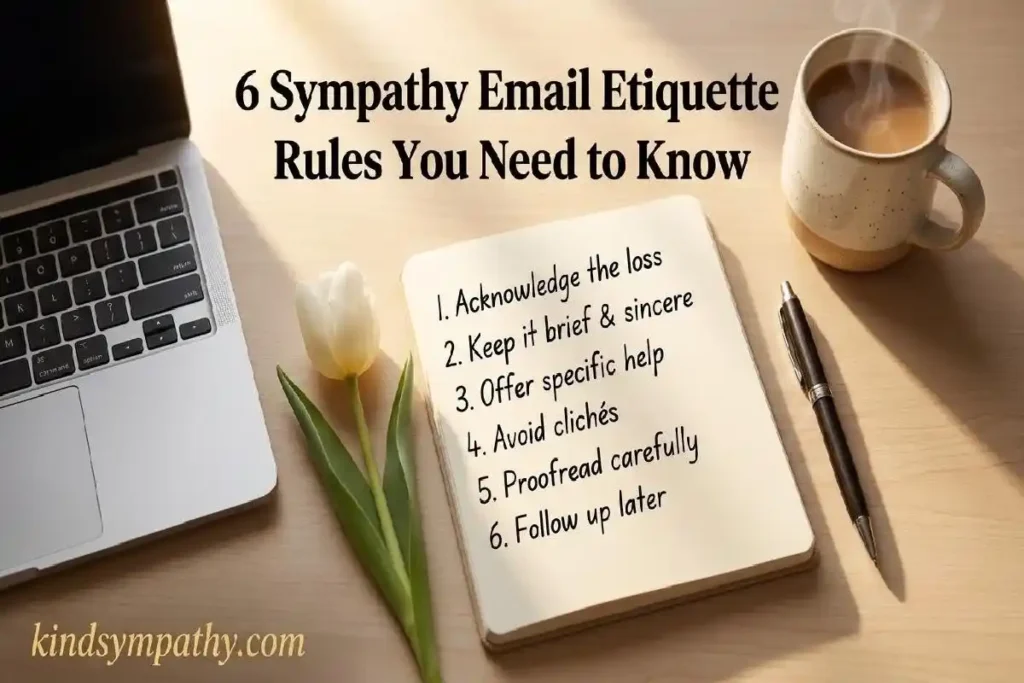
Sympathy Email to Boss Etiquette — 6 Things Worth Knowing
1. Send it the same day you hear. Delayed condolences to a boss feel like afterthoughts. If you heard this morning, send the email this morning. Prompt is caring.
2. Keep it short. Three to five sentences is the right length for most boss-sympathy emails. Anything longer risks overstepping the professional boundary or creating the impression you expect a conversation.
3. Always reassure them about work. The most practical thing you can do is remove the anxiety about professional responsibilities. One sentence: “Everything is covered, please don’t worry.” That single line does enormous good.
4. Don’t ask how they’re doing. In a condolence email to your boss, “how are you doing?” puts them in the position of having to perform okayness or explain their grief. Skip it. Say what you mean to say, and leave space for them to respond (or not) as they choose.
5. Use their name — not their title. “Dear [first name]” is almost always more appropriate than “Dear Mr./Ms. [surname]” in a condolence context, even with a professional boss. Check the norm in your workplace — but lean toward warmth.
6. Send it even if you don’t know what to say. Research on the psychology of grief and human connection shows that the act of reaching out matters enormously to bereaved people — even more than the specific words used. And Harvard Health’s work on grief and support confirms that acknowledgment from workplace communities meaningfully affects how people navigate loss. A brief, genuine email from you matters. Don’t let “I don’t know what to say” become a reason to stay silent.

What NOT to Write in a Sympathy Email to Your Boss
A few specific patterns to avoid in the upward-hierarchy context.
❌ “I know this must be so hard for you.” Why it misses: Sounds presumptuous — you don’t know their full relationship with the person they lost. ✅ Write instead: “Please accept my sincere condolences” — clean, honest, appropriate.
❌ “Let me know if there’s anything I can do.” Why it misses: Vague offer that places burden on the griever to think of something. Your boss won’t reach out. ✅ Write instead: State specifically what you’ve already covered: “I’ve handled [X] — there’s nothing that needs your attention.”
❌ “I totally understand, I lost my [relative] last year.” Why it misses: Centres your experience rather than theirs. In an upward-hierarchy context, this also risks feeling overly personal. ✅ Write instead: Keep the focus entirely on them. “I’m so sorry” is enough.
❌ Including work questions in the same email. Why it misses: Mixing “I’m sorry for your loss” with “also, about the Friday report…” is tone-deaf. ✅ Do instead: Send separate emails. No work matters in the condolence email.
❌ “Stay strong.” Why it misses: Assigns the performance of strength to someone who is grieving. ✅ Write instead: “I hope you’re surrounded by good support.”
One-Line Condolence Notes to a Boss ✨
For a card, a note attached to flowers, or a very brief follow-up:
- “Thinking of you. Please take all the time you need.”
- “I’m so sorry for your loss. Everything here is covered.”
- “My sincere condolences. I hope you’re being looked after.”
- “Thinking of you and of [name]. Please take care.”
- “So sorry. Work is handled. Please just focus on yourself.”
❓ FAQ — Sympathy Email to Boss
What is the best way to send a sympathy email to your boss?
The best sympathy email to boss is brief, genuine, and includes one clear statement that work is covered. Three to five sentences is ideal. Acknowledge the loss, express genuine care, remove the work anxiety, and close warmly. See examples 1 and 2 in this guide for the cleanest versions of this formula.
What are some short sympathy email to boss examples I can send right now?
Short condolence email to manager examples are in the guide at examples 9–11. The briefest version: “Dear [Name], I’m so sorry to hear of your loss. Please accept my sincere condolences. Work is covered — take all the time you need. [Your name].” Add a subject line like “My condolences” and send. Done.
How do you write a condolence email to your boss when you don’t know them well?
When the relationship is more formal, keep the email shorter, use their proper name, and stick to the professional register. Example 9 or example 11 in this guide both work for less-close relationships. The key: brief, warm, practically reassuring. You don’t need to know them well to acknowledge their loss respectfully.
Should a sympathy email to your boss be formal or personal?
Match the email to the relationship you have. If you’re close to your manager and they use your first name and joke with you — you can be warmer (see examples 5, 12, 13). If the relationship is more formal and professional, keep it clean and respectful (examples 1, 4, 9). The templates are organised by closeness of relationship to help you find the right register.
Is it appropriate to send a condolence email to your boss at all?
Absolutely — it’s not only appropriate, it’s the kind thing to do. A brief condolence note to a manager or supervisor is entirely within professional norms and is almost always welcomed. The worry about overstepping is almost always unfounded. What feels like overstepping is usually a long, emotional message — not a brief, warm acknowledgment. Research on the psychology of grief and connection in the workplace consistently shows that acknowledgment from colleagues and reports is meaningful to grieving leaders. And Harvard Health confirms that professional community support is a genuine factor in how people navigate loss. Send the email.